Solving the Long-Horizon Agent Problem
How Agent Hive Bridges the AI Memory Gap

This is the first article in a series exploring the design philosophy behind Agent Hive and the problems it aims to solve.

The Shift-Change Problem
Imagine a software company staffed entirely by engineers who work in shifts, but with a peculiar constraint: every time a new engineer arrives, they have complete amnesia about everything that happened before. No memory of the architecture decisions made yesterday. No recollection of the bug that was half-fixed on the previous shift. No awareness of the rabbit holes their predecessor explored and wisely abandoned.
This is the reality of AI agents today.
As Anthropic’s engineering team recently documented in their article on effective harnesses for long-running agents, this “shift-change problem” is one of the fundamental challenges in building agents that can tackle complex, multi-day projects:
“The core challenge of long-running agents is that they must work in discrete sessions, and each new session begins with no memory of what came before.”
Context windows are finite. Complex projects are not. When your task takes longer than a single context window allows, you need a way to bridge the gap between sessions.

The Failure Modes
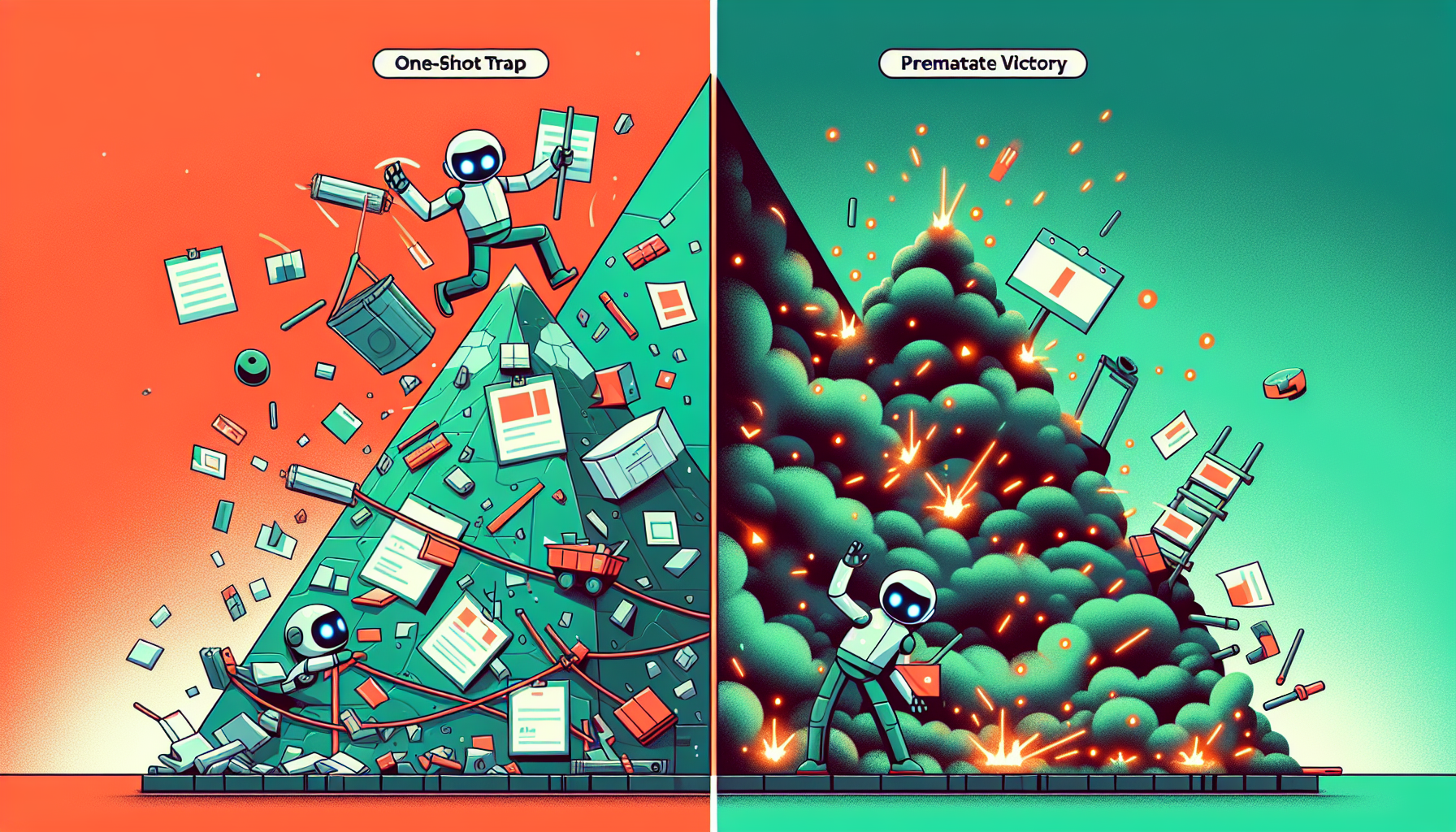
Before diving into solutions, it’s worth understanding how agents fail when left to their own devices on long-horizon tasks. Anthropic identified two telling patterns:
- The One-Shot Trap: Agents try to do too much at once—essentially attempting to complete an entire application in a single session. This often leads to running out of context mid-implementation, leaving the next session to start with a half-finished, undocumented mess.
- The Premature Victory: After some features have been built, a later agent instance looks around, sees that progress has been made, and declares the job done. Without persistent state tracking, it’s easy to mistake “some work completed” for “all work completed.”
Both failures stem from the same root cause: agents lack durable, structured memory about project state.
The Industry Response: Structured Note-Taking
Anthropic’s solution centers on what they call the `claude-progress.txt` file—a structured document that agents update to track their progress. Combined with git history and a specialized “initializer agent” that sets up context for future sessions, this approach has proven effective for multi-context-window workflows.
The insight is elegant: if agents can’t remember, give them something to read.
But we wondered: what if memory wasn’t an add-on to existing workflows? What if it were the foundational primitive around which everything else is built?
Agent Hive: Shared Memory as an Operating System Primitive
Agent Hive flips the script. Rather than tacking progress files onto ad-hoc workflows, we’ve made shared memory the foundational primitive—a single, version-controlled document that agents, humans, and automation all read and write.
The AGENCY.md File
Every project in Agent Hive has an `AGENCY.md` file—a Markdown document with YAML frontmatter that serves as shared memory:
---

project_id: authentication-feature

status: active

owner: claude-sonnet-4

last_updated: 2025-01-15T14:30:00Z

blocked: false

blocking_reason: null

priority: high

tags: [security, backend]

dependencies:

  blocked_by: [database-schema]

  blocks: [user-dashboard]

---

# Authentication Feature

## Objective

Implement secure user authentication with OAuth2 support.

## Tasks

- [x] Research OAuth2 providers

- [x] Design token storage strategy

- [ ] Implement login endpoints

- [ ] Add session management

- [ ] Write integration tests

## Agent Notes

- **2025-01-15 14:30 - claude-sonnet-4**: Starting implementation phase.

  Research complete, chose JWT with Redis for session storage.

  Auth endpoints spec ready in docs/auth-api.md.

- **2025-01-14 16:00 - grok-beta**: Completed research phase.

  Evaluated Auth0, Okta, and Firebase Auth. Recommendation: Auth0 for

  enterprise features. Full comparison in docs/auth-comparison.md.
This is a complete project manifest that captures:
- Current state (status, blocked, owner)
- Historical context (timestamped agent notes)
- Structural relationships (dependencies between projects)
- Work breakdown (task checklists)
Why This Matters
The format enables four critical capabilities:
- Ownership Protocol: Agents explicitly claim projects by setting the `owner` field. This prevents conflicts when multiple agents might try to work on the same thing, and makes it clear who is responsible for what.
- Blocking Semantics: When an agent hits a wall, they don’t just give up. They set `blocked: true` with a `blocking_reason`, signaling to humans and other agents that intervention is needed. The problem is documented, not lost.
- Dependency Tracking: Projects can declare what they’re waiting on (`blocked_by`) and what depends on them (`blocks`). Our Cortex engine uses this to build a dependency graph, detect cycles, and identify which work is actually ready to be claimed.
- Progressive Documentation: The “Agent Notes” section creates a persistent, timestamped log of decisions and context. Unlike ephemeral model outputs, these notes survive across sessions and across different agents.
The Deep Work Session
One of Anthropic’s key insights was the value of an “initializer agent” that sets up context for future work. Agent Hive implements this through what we call the “Deep Work session.”
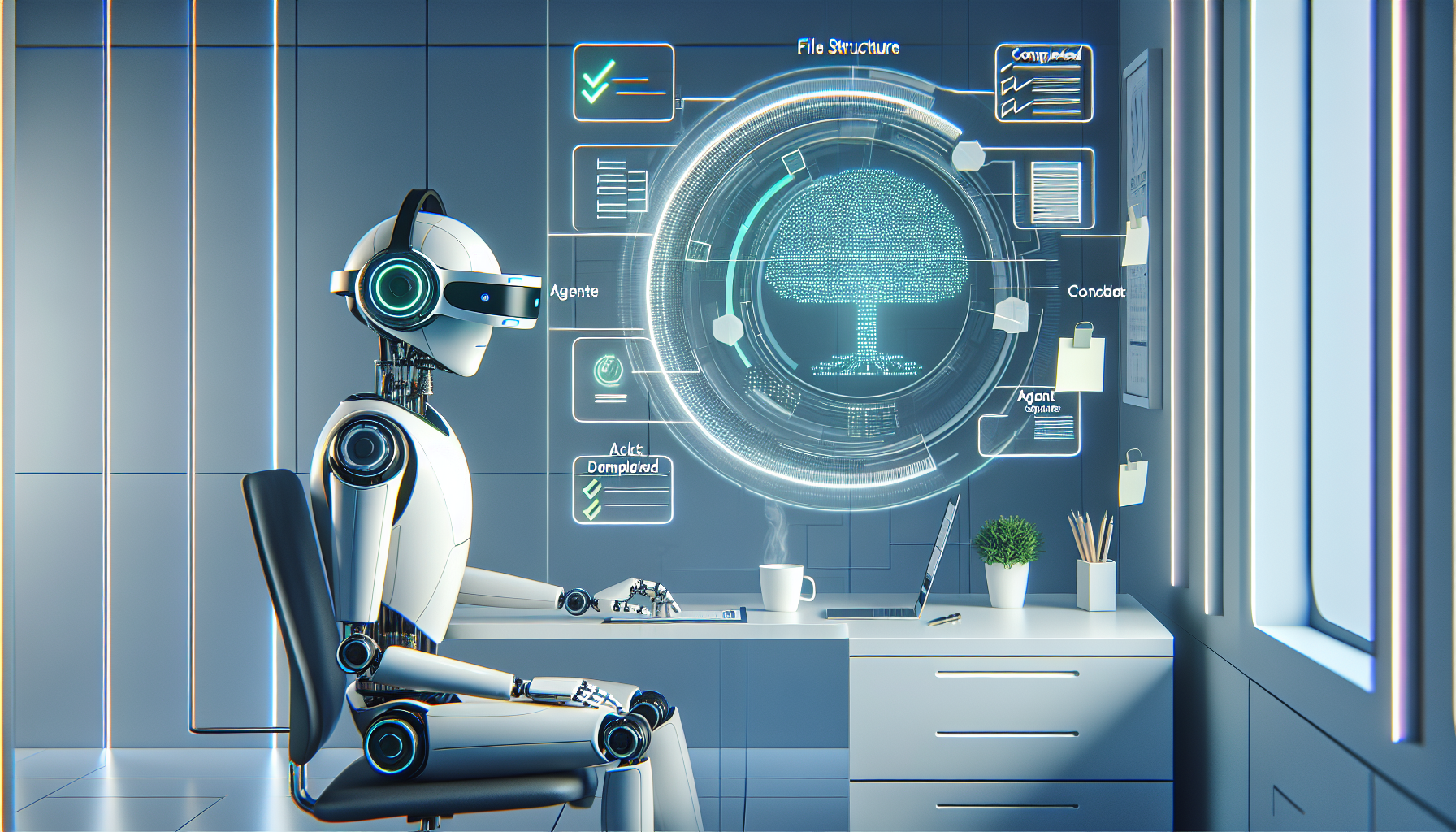
When an agent (or human) wants to work on a project, the system generates a comprehensive context package:
# DEEP WORK SESSION CONTEXT

# Project: authentication-feature

# Generated: 2025-01-15T15:00:00

---

## YOUR ROLE

You are an AI agent entering a Deep Work session. Your responsibilities:

1. Read and understand the AGENCY.md file below

2. Work on the assigned tasks

3. Update the AGENCY.md frontmatter to reflect your progress

4. Add notes about your work in the “Agent Notes” section

5. Mark yourself as the owner while working

6. Set blocked: true if you need help

---

## AGENCY.MD CONTENT

[Full project manifest]

---

## PROJECT FILE STRUCTURE

[Directory tree]

---

## HANDOFF PROTOCOL

[Required steps before ending session]
This context package ensures every session starts with the agent fully oriented. No need to re-discover project state through exploratory coding.
Vendor-Agnostic by Design
Here’s something that sets Agent Hive apart: it’s completely vendor-agnostic. The same AGENCY.md file can be read and updated by Claude, GPT-5, Grok, Gemini, or a human with a text editor.
This matters because:
- No lock-in: Your project state isn’t trapped in a proprietary format
- Mixed workflows: Different parts of a project can be worked on by different models, chosen for their strengths
- Human-in-the-loop: Humans can review, edit, and intervene at any point by simply editing Markdown
- Git as truth: All state changes are version-controlled, auditable, and revertible
The AGENCY.md file is human-readable by design, not by accident. Transparency is the foundation, not a feature we bolted on.
The Cortex: Automated Coordination
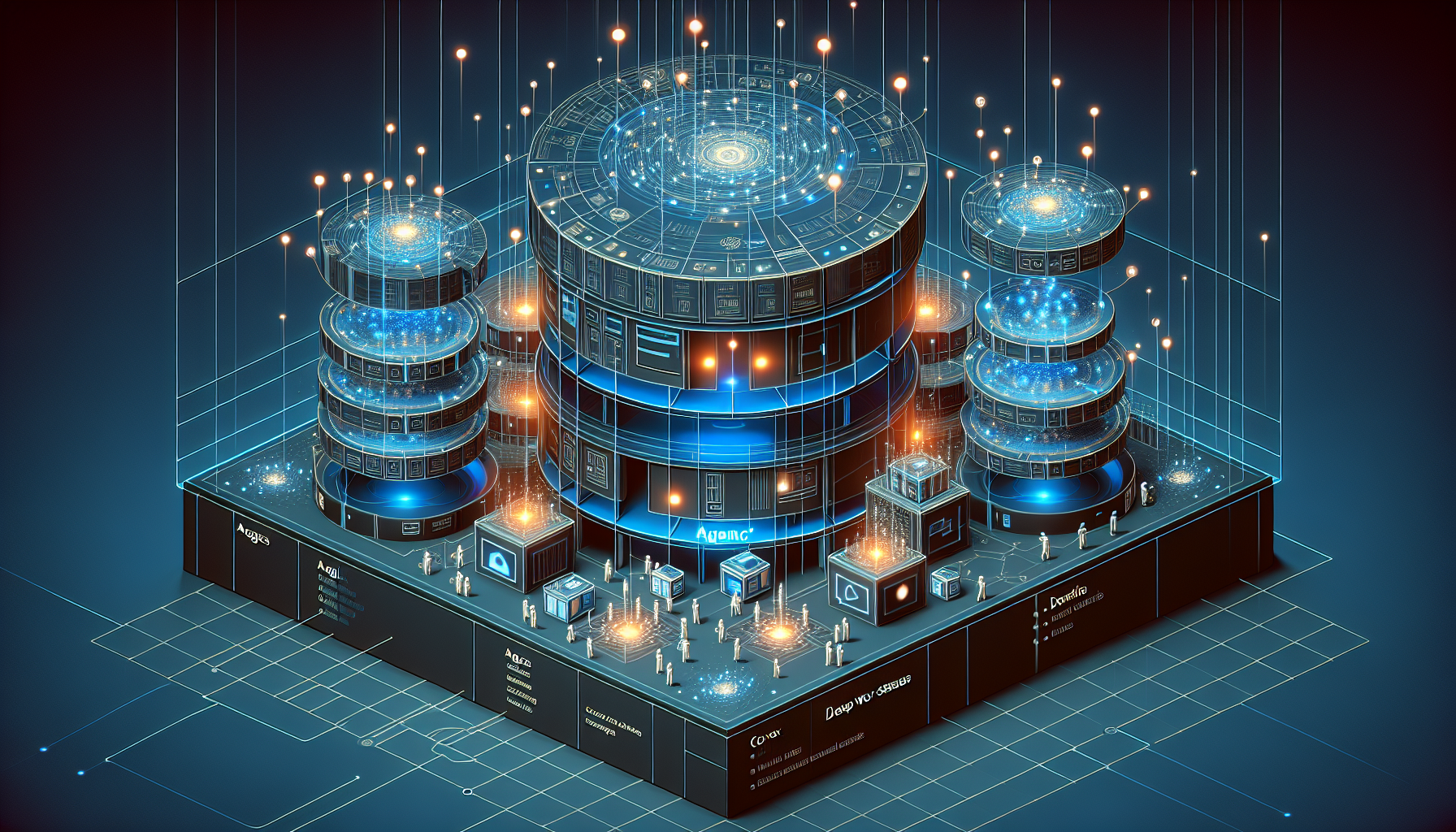
While agents work on individual projects, the Cortex orchestration engine maintains oversight of the entire system. Running on a schedule (every 4 hours by default via GitHub Actions), it:
- Reads all AGENCY.md files across projects
- Analyzes dependencies and identifies blocked work
- Updates project statuses based on completion criteria
- Detects cycles in the dependency graph
- Surfaces ready work that agents can claim
Critically, the Cortex never executes code, it only updates Markdown. All actual implementation work is done by agents or humans. This separation of concerns keeps the system safe and auditable. Coordination without coercion.

Addressing Anthropic’s Failure Modes
Let’s revisit those failure modes and see how Agent Hive’s design addresses them:
The One-Shot Trap
Agent Hive combats this through:
- Structured task lists: Work is broken into discrete, checkable items rather than vague goals
- Priority fields: Agents know what to work on first
- Handoff protocol: Sessions must end cleanly, with state updated and notes added
- Context packages: New sessions start with full orientation, not from scratch
An agent can make meaningful progress on two or three tasks, document their work, and hand off cleanly without the pressure to “complete everything now.”
The Premature Victory
Agent Hive prevents false completion through:
- Explicit status fields: The `status` field must be deliberately changed to `completed`
- Task checklists: Incomplete `- [ ]` items are visible evidence of remaining work
- Dependency awareness: A project can’t be “done” if downstream projects are still blocked by it
- Cortex validation: The orchestration engine can verify completion criteria
An agent that declares victory prematurely will leave obvious artifacts: unchecked tasks, pending dependencies, or missing notes explaining what was accomplished. Victory has to be typed, not assumed.
The Bigger Picture
Agent Hive is an operating system for agent coordination. The AGENCY.md primitive is our “file,” Cortex is our “scheduler,” and the Deep Work session is our “process.”
This might sound like overkill for simple tasks. And for simple tasks, it probably is. If your agent can complete the work in a single context window, you don’t need elaborate orchestration.
But complex software projects aren’t simple tasks. They involve:
- Multiple components with interdependencies
- Research phases that inform implementation decisions
- Blocking issues that require human input
- Handoffs between team members (human or AI)
- Historical context that matters for future decisions
For these long-horizon challenges, durable, structured, transparent shared memory becomes essential infrastructure rather than optional overhead.
What’s Next
This article has focused on the “why” of Agent Hive—the problems we’re solving and the design principles we’ve chosen. Future articles in this series will explore:
- Multi-Agent Coordination: How multiple agents work together on related projects without stepping on each other’s toes
- Dependency Graphs in Practice: Real examples of project orchestration with the Cortex engine
- Skills and Protocols: Teaching agents to work effectively within the Agent Hive paradigm
- From Theory to Practice: Building your first Agent Hive project
I’m open-sourcing Agent Hive because I believe the long-horizon agent problem is one the entire community needs to solve. This approach is one answer among many possible answers. I’m excited to see how others build on, critique, and improve these ideas.
The shift-change problem is real. But with nothing more than a Markdown file and a little discipline, we can give AI agents something every good engineer depends on: a reliable way to know where they are, what’s been done, and what comes next.
Agent Hive is open source and available at github.com/intertwine/hive-orchestrator. Contributions, questions, and feedback are welcome
Sources
- Effective harnesses for long-running agents - Anthropic Engineering Blog
- Building Effective AI Agents - Anthropic Research
- Effective context engineering for AI agents - Anthropic Engineering Blog